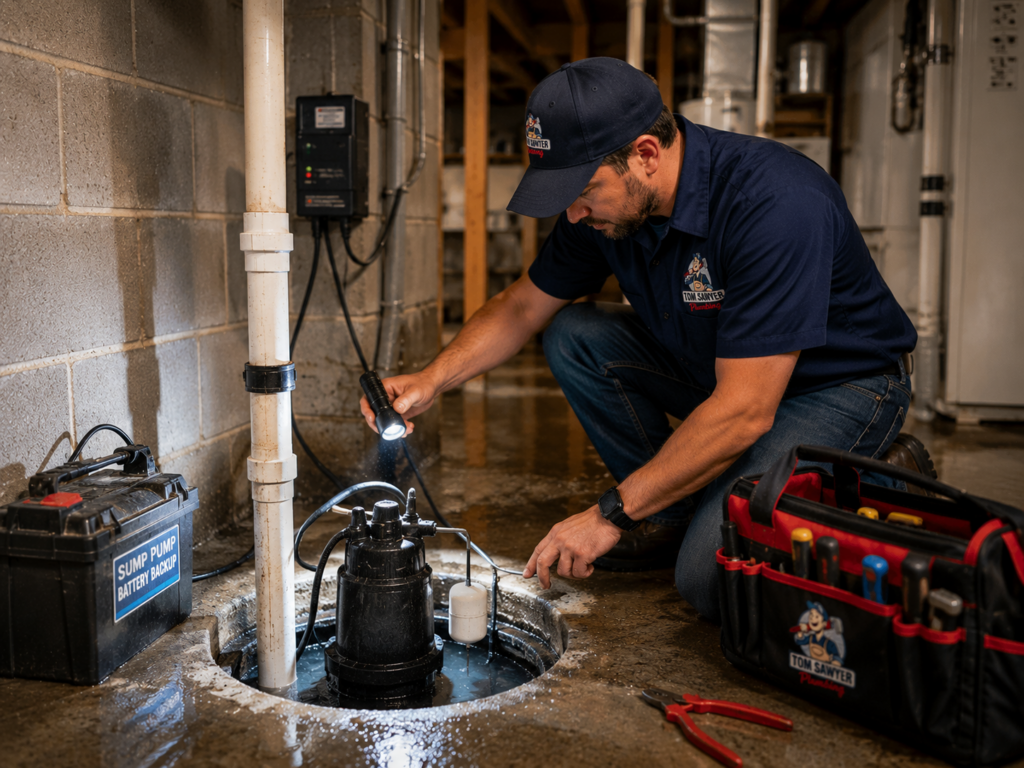
Quick Answer: If your sump pump is not working in Carol Stream IL, check the power source first, then test the float switch by pouring water into the pit. If the pump does not activate, the float may be stuck, the motor may have failed, or the check valve may be allowing water to flow back into the pit. A sump pump that runs constantly but the pit keeps filling usually points to a failed check valve or a discharge line blockage. If the pump is over 7 years old and has failed once, replacement with a battery backup is the most reliable fix.
Carol Stream sits in the heart of DuPage County where flat terrain, clay-heavy soil, and a high seasonal water table create the perfect conditions for basement water problems. When a heavy spring rain hits or snowmelt saturates the ground, your sump pump is the only thing standing between a dry basement and a flooded one.
The problem is that most homeowners never think about the sump pump until it stops working. And by that point, water is already rising in the pit, creeping across the basement floor, and soaking everything it touches.
If your sump pump is not running when it should be, or if it runs but your basement is still getting wet, this guide covers the most likely causes and what to do next.
Check the Power First
This sounds obvious, but it is the most common reason sump pumps fail during storms, which is exactly when they are needed most. Heavy rain often comes with lightning, high winds, and power outages. If your pump is plugged into a standard outlet with no battery backup, it shuts off the moment the power goes out.
Check the outlet by plugging something else into it. If the outlet is dead, check your breaker panel. Sump pumps should be on a dedicated circuit, but in some older Carol Stream homes they share a circuit with other basement equipment that may have tripped the breaker.
If the power is on and the pump still does not run, unplug it, wait 30 seconds, and plug it back in. Some pumps have a built-in thermal overload that trips when the motor overheats. A brief power reset can sometimes restore function.
If your pump does not have a battery backup, this is the single most important upgrade you can make. A backup system keeps the pump running during power outages for 8 to 12 hours or more depending on the battery size and how frequently the pump cycles. The sump pump service page covers the full range of primary and backup pump options.
Test the Float Switch
The float switch is the mechanism that tells the pump when to turn on. As water rises in the pit, the float rises with it and triggers the pump motor. When the water level drops, the float lowers and shuts the pump off.
Float switches fail in two ways. They get stuck in the “off” position, meaning the pump never activates even as water rises. Or they get stuck in the “on” position, meaning the pump runs continuously and burns out the motor.
To test it, pour a 5-gallon bucket of water slowly into the sump pit. Watch the float. It should rise with the water level and trigger the pump. If the float moves but the pump does not start, the switch itself may be faulty. If the float does not move at all, it may be jammed against the pit wall, tangled in the power cord, or blocked by debris.
Repositioning the float or clearing debris from the pit sometimes fixes the issue immediately. If the switch is corroded or mechanically failed, replacing the switch (or the entire pump if the unit is old) is the correct repair.
The Check Valve Problem
If your sump pump runs, shuts off, and then starts again a few minutes later in a repeating cycle even when it has not rained, the check valve has likely failed. The check valve sits on the discharge pipe and prevents water from flowing back into the pit after the pump pushes it out.
When the valve fails, water in the discharge line drains back down into the pit, the float rises again, and the pump activates again. This constant cycling dramatically shortens the life of the pump motor and increases your electricity costs.
Replacing a check valve is a straightforward repair for a plumber. It is also a good time to inspect the discharge line for leaks, blockages, or frozen sections near the exterior exit point.
Discharge Line Blockages
The discharge line carries water from the pump to the exterior of the home, where it should deposit at least 6 feet away from the foundation. If that line is clogged with debris, crushed by settling soil, or frozen during a late-season cold snap, the pump runs but the water has nowhere to go.
Walk outside and locate where the discharge line exits the house. Run the pump and confirm water is flowing freely from the end of the line. If nothing comes out or the flow is weak, the line is blocked. In Carol Stream, freeze damage to discharge lines is common in early spring when nighttime temperatures still dip below freezing.
If the discharge line dumps water too close to the foundation, the water cycles right back to the sump pit through the ground, and the pump runs endlessly without actually solving the problem. Extending the line further from the house is a simple fix that dramatically improves performance.
When the Motor Has Failed
If the power is on, the float switch moves freely, and the pump still does not run, the motor has likely burned out. This happens most often when pumps run continuously during heavy rain events, when the check valve failure causes constant cycling, or when the pump is simply old and has reached the end of its mechanical life.
Most residential sump pumps last 7 to 10 years. If your Carol Stream home’s pump is in that range and has failed, replacement is the better investment over motor repair. A new primary pump with a battery backup system provides reliable protection and eliminates the risk of repeat failure.
The Connection Between Sump Pumps and Sewer Backups
In Carol Stream and across DuPage County, some older homes have sump pumps that discharge into the sanitary sewer system. This was common practice decades ago but is now prohibited in most municipalities because it contributes to sewer overloads during storms.
If your sump pump discharges into the sewer and the sewer system backs up during heavy rain, the backup can push sewage into your basement through floor drains and fixtures. This is a far more serious problem than groundwater seepage and creates health hazards that require professional cleanup.
If you suspect your sump pump is connected to the sewer, or if you experience sewer backups during rain events, a plumber can reroute the discharge to a proper exterior exit point. Understanding what causes sewer lines to fail helps you identify whether the backup is coming from the pump connection, the sewer lateral, or both.
Seasonal Maintenance That Prevents Failure
The worst time to discover your sump pump is broken is during a storm. A quick annual test takes five minutes and can save thousands in water damage.
Pour water into the pit and confirm the pump activates. Listen for grinding, rattling, or unusual motor sounds. Check that the float moves freely. Inspect the discharge line outside for blockages or damage. Verify the backup battery is charged if you have one. Clean debris from the pit. And make a note of the pump’s age so you can plan a proactive replacement before it fails on its own.
If your home has experienced basement flooding in the past, investing in a higher-capacity primary pump, a battery backup, and a water alarm sensor at floor level gives you three layers of protection.
Do Not Wait for the Next Storm
Tom Sawyer Plumbing LLC serves Carol Stream and all DuPage County communities within a 30-mile radius. We install, repair, and replace sump pumps and backup systems. If your pump has not been tested this year or if it failed during the last rain, we can evaluate it and give you a straight recommendation.
Call (630) 849-9265 to schedule a sump pump inspection or replacement before the next heavy rain.
We also serve homeowners in Wheaton with sump pump repair and installation. For a complete seasonal maintenance walkthrough, read our spring plumbing checklist.