Basement flooding is one of the most common and most stressful problems West Chicago homeowners deal with. Whether it is a full-blown flood after a spring thunderstorm or a slow, steady seep that leaves the carpet damp for days, water in the basement is never just a nuisance. It damages stored belongings, creates ideal conditions for mold, and erodes your home’s resale value over time.
West Chicago sits in DuPage County where the water table, soil composition, and heavy seasonal rain create conditions that put basements at risk. Understanding why your basement floods – and which solution actually fixes the root cause – is the first step toward keeping it dry for good.
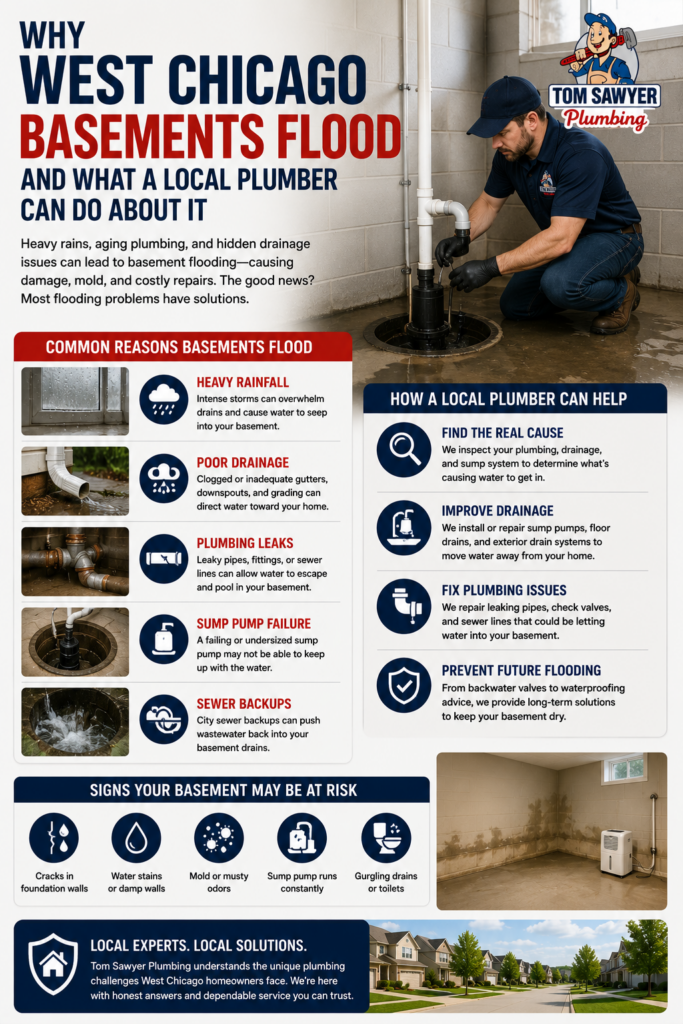
The Most Common Causes of Basement Flooding in West Chicago
Not all basement floods start the same way, and the right fix depends entirely on identifying the right cause.
Sump pump failure. Most West Chicago homes with basements have a sump pump. When it works, you barely notice it. When it fails – due to a mechanical breakdown, a stuck float switch, a clogged intake, or a power outage during a storm – groundwater rises through the sump pit and floods the basement floor. Sump pump failure during heavy rain is the single most common cause of residential basement flooding in this area.
Sewer backup. When the municipal sewer system gets overwhelmed during heavy rain events, or when a blockage develops in your home’s sewer lateral, sewage can reverse direction and enter the home through basement floor drains, toilets, and shower drains. This type of flooding is the most serious because it involves contaminated water.
Foundation cracks and wall seepage. Hydrostatic pressure from saturated soil pushes water through cracks in the foundation wall or the joint where the wall meets the floor slab. This type of water entry is usually a slow seep rather than a sudden flood, but over time it keeps the basement chronically damp and creates mold problems.
Downspout and grading issues. If your downspouts dump water directly at the foundation or if the grading around your home slopes toward the house instead of away from it, you are directing stormwater straight to your basement walls. This is often the easiest factor to fix and the one most commonly overlooked.
Why Sump Pump Maintenance Matters More Than Most Homeowners Think
A sump pump is a mechanical device sitting in a wet pit, running intermittently under pressure, often for years without anyone checking on it. That is a recipe for failure at the worst possible time.
The float switch is the most common failure point. Debris in the pit can shift the float out of position. The check valve can fail and allow water to flow back into the pit. The motor can burn out from overwork during a prolonged rain event. And if your home loses power during a storm – which happens regularly in West Chicago – the pump stops entirely.
A plumber who services sump pump systems can test the pump, clean the pit, verify the float and check valve operation, inspect the discharge line, and recommend a battery backup system if you do not already have one.
Annual sump pump maintenance before the heavy rain season is one of the highest-return investments a West Chicago homeowner can make. It costs far less than a single flood cleanup.
Sewer Backflow Prevention
If your West Chicago home has ever experienced a sewer backup, or if your basement has fixtures connected to the sewer line (a floor drain, a toilet, a laundry sink), installing a backflow prevention valve is worth serious consideration.
A backflow preventer is a one-way valve installed on your sewer lateral that allows wastewater to flow out of your home normally but closes automatically if the flow reverses. During a combined sewer overflow event – where stormwater overwhelms the sewer system – this valve can be the difference between a dry basement and a sewage-filled one.
Not every home needs one, and the installation requires access to the sewer line, usually in the basement floor. Your plumber can evaluate your setup and advise whether it makes sense based on your home’s history and risk profile.
When the Problem Is Deeper in the Line
Sometimes basement flooding that appears to come from the sewer side is caused by a partially collapsed or root-clogged lateral that has been restricting flow for months or years. A sewer camera inspection can reveal these problems clearly and help you make an informed decision about repair vs. replacement.
If the lateral is compromised, the sewer line repair and replacement team at Tom Sawyer Plumbing can walk you through your options – including trenchless methods when the site conditions allow.
Simple Exterior Fixes That Reduce Flooding Risk
Before spending money on plumbing repairs, check the exterior conditions around your foundation. These are free or low-cost improvements that can reduce water pressure against your basement walls significantly:
Make sure downspouts extend at least 4 to 6 feet away from the foundation. If they dump water right at the wall, add extensions. Check the grading around the perimeter of the house. Soil should slope away from the foundation at a minimum of 6 inches over the first 10 feet. Fill any low spots where water pools near the foundation after rain.
According to the Federal Emergency Management Agency, even homes not in designated flood zones can experience water intrusion from localized drainage issues, high water tables, and storm overload. West Chicago’s clay-heavy soils are particularly slow to drain, which keeps hydrostatic pressure elevated for hours after a rain event.
Seasonal Timing Matters in West Chicago
Spring and early summer are peak flooding season. Snowmelt combined with spring thunderstorms can saturate the soil and overwhelm drainage systems in a matter of hours. This is also the time when winter damage to gas lines becomes apparent – something covered in detail in this post about whether gas lines need insulation in winter.
The best time to prepare your basement for flooding season is before the first heavy rain of the year. Test your sump pump manually by pouring water into the pit and confirming the pump activates and discharges properly. Check that the discharge line is clear and not frozen or disconnected. And schedule a professional inspection if the pump is more than 7 to 10 years old.
Stop Dealing With Repeated Basement Floods
If you are tired of mopping up after every storm, the problem is solvable. Tom Sawyer Plumbing LLC is based right here in West Chicago and serves all surrounding DuPage County communities. We can diagnose the exact cause of your basement water – sump pump, sewer line, or drainage issue – and give you an honest recommendation on how to fix it permanently.
Call (630) 849-9265 to schedule an inspection before the next storm hits.
We also help homeowners in Carol Stream resolve basement flooding issues. If frozen pipes contributed to the problem, our guide on preventing frozen pipe damage covers the steps to protect your home before next winter.