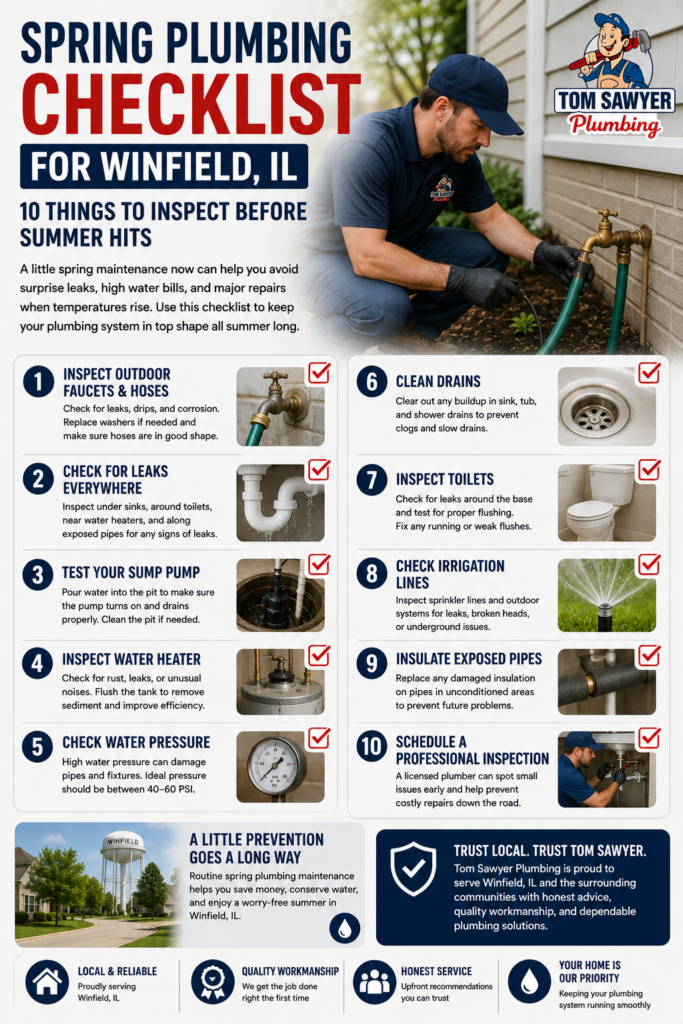
Winter is hard on plumbing in Winfield. Freezing temperatures stress supply lines, ice dams affect roof drainage, sump pumps sit idle during dry cold spells and then face sudden demand when the spring thaw hits, and outdoor hose bibs that were not properly winterized can develop cracks that do not reveal themselves until you turn the water back on.
Spring is when all of that hidden winter damage becomes visible – and when a 30-minute inspection through your home can catch small problems before they turn into expensive mid-summer emergencies.
This checklist covers the 10 most important things every Winfield homeowner should check, test, or inspect each spring. You can handle most of these yourself. For the ones that need a professional, you will know exactly what to ask for.
1. Test Your Sump Pump Before the Spring Rains Arrive
This is the most important item on the list. Your sump pump may not have run in weeks or months during a dry winter. That does not mean it is ready to handle a spring downpour.
Pour a 5-gallon bucket of water slowly into the sump pit. The float switch should activate, the pump should turn on, and the water should discharge through the line to the exterior. Listen for unusual sounds – grinding, humming without pumping, or clicking without starting are all signs of a failing motor or stuck switch.
Check the discharge line outside. Confirm it is not clogged with debris, disconnected, or frozen (early spring in Winfield can still see overnight freezing). If the discharge dumps water too close to the foundation, add an extension to move it at least 6 feet away.
If your pump does not have a battery backup, spring is the time to add one. Power outages during heavy storms are exactly when your sump pump needs to run the most. The sump pump service page covers installation and backup options.
2. Inspect Every Outdoor Hose Bib
Go to each outdoor faucet and turn it on slowly. Watch for water spraying from the body of the faucet, dripping from the handle, or – more concerning – water appearing inside the house on the wall behind the hose bib.
A frost-damaged hose bib can crack internally over winter and appear fine externally until you pressurize it. If water shows up inside the wall when you open the outdoor faucet, shut it off immediately and call a plumber. That crack will not seal itself, and running it risks water damage inside the wall cavity.
3. Check Exposed Pipes in Unheated Spaces
Walk through your basement, crawl space, garage, and any utility areas. Look at exposed supply lines and drain pipes for signs of frost damage: bulging, cracking, discoloration, green corrosion on copper, or active drips.
Pay close attention to pipes running along exterior walls and near rim joists. These are the highest-risk locations for freeze damage, and a small crack that developed in January may only start leaking now that temperatures are rising and ice plugs are melting.
If you spot a leak or damaged pipe, your residential plumber can repair or replace the section before it worsens.
4. Run Water in Every Fixture – Especially Ones You Do Not Use Often
Guest bathrooms, basement sinks, and utility tubs that sit unused through winter can develop problems that only show up when you run them again. Turn on every faucet in the house – hot and cold – and let it run for a full minute.
You are checking for three things: water pressure that feels normal, water that runs clear (not rusty or discolored), and drains that flow freely without gurgling or backing up.
If a fixture sputters or spits air when you first turn it on, there may be air trapped in the supply lines. That is a common post-winter issue, and this guide on getting air out of water lines walks through the exact steps to purge it.
Also check that P-traps under unused fixtures still hold water. A dry trap allows sewer gas to enter the house. If you smell something foul near a drain that has not been used in months, simply running the faucet for 30 seconds refills the trap and solves it.
5. Flush Your Water Heater
Spring is the ideal time to flush sediment from your water heater tank. After months of heavy use during the heating season, mineral deposits have been settling at the bottom of the tank, reducing efficiency and accelerating wear.
Attach a garden hose to the drain valve at the bottom of the tank, route it to a floor drain or outside, and open the valve. Let the water run until it flows clear. If the water comes out with visible sediment or a rusty color, the flush was overdue.
If your water heater is making popping or rumbling sounds, the sediment layer may be too thick for a simple flush to resolve. That is worth a professional assessment to determine whether the unit has enough remaining life to justify continued maintenance. The water heater service page covers the common warning signs.
6. Check Toilet Components
Lift the lid off every toilet tank and look inside. Check that the flapper seats properly and does not show cracks, warping, or mineral buildup. Drop a few drops of food coloring into the tank and wait 15 minutes without flushing. If color appears in the bowl, the flapper is leaking and the toilet is silently wasting water around the clock.
A running toilet can waste 200 or more gallons per day. That shows up on your water bill fast. Replacing a flapper costs a few dollars and takes five minutes. If the fill valve, flush valve, or handle mechanism also needs attention, a plumber who handles toilet and fixture repair can replace worn components during a single visit.
7. Clear Debris From Floor Drains
Basement floor drains, garage drains, and laundry room drains collect dust, lint, and debris over winter – especially in homes where the basement is used for storage or workshop activities.
Remove drain covers and clean out anything visible. Pour a gallon of water down each floor drain to confirm flow and refill the trap. If the water drains slowly or backs up, the line below may be partially clogged and should be professionally cleaned before it causes a backup during a heavy rain event.
If you have noticed slow drains in multiple areas, a drain cleaning service can clear the main lines mechanically rather than waiting for the problem to get worse.
8. Inspect Visible Drain and Sewer Lines
In homes with exposed basement plumbing, you can visually inspect drain lines for signs of trouble. Look for white mineral deposits on pipe joints (which can indicate a slow leak that evaporates before it drips), rust stains on cast iron sections, and any sagging or separated joints.
If your Winfield home is older and you have never had the sewer lateral inspected, spring is a smart time to schedule a sewer camera inspection. Tree roots that have been growing all winter are about to hit their aggressive spring growth phase, and catching a root intrusion now is far cheaper than dealing with a full sewer backup in June.
9. Check Washing Machine Hoses
Rubber washing machine supply hoses are one of the most common sources of catastrophic water damage in residential homes. They are under constant pressure, and over time the rubber degrades, develops bulges, and eventually bursts.
Inspect both hot and cold supply hoses. Look for bulging, cracking, stiffness, or any sign of moisture at the connection points. If your hoses are the original rubber ones that came with the machine and they are more than 5 years old, replace them with braided stainless steel hoses. It is a $20 investment that prevents a potential multi-thousand-dollar flood.
10. Review Your Water Bill Trend
Pull up your water bills from the past 3 to 6 months and compare them. A gradual increase with no change in household habits often points to a hidden leak – a running toilet, a supply line drip inside a wall, or a slow underground service line leak.
If you see an unexplained increase, start with the toilet food coloring test mentioned above. If all toilets pass, the leak may be in a less visible location and is worth having a plumber investigate with a pressure test.
One Walk-Through Can Save You Thousands
This entire checklist takes about 30 to 45 minutes to work through. It catches the kinds of problems that quietly escalate over spring and summer until they become urgent, expensive, and disruptive.
If anything on this list raises a concern – a sump pump that does not activate, a hose bib that leaks inside the wall, a water heater that sounds wrong – Tom Sawyer Plumbing LLC serves Winfield and all surrounding DuPage County communities within a 30-mile radius. We give honest assessments with no pressure to buy services you do not need.
Call (630) 849-9265 to schedule a spring plumbing inspection or to get a quick answer on anything you found during your walk-through.
To protect your pipes through next winter, read our guide on preventing frozen pipes in Illinois homes. For water heater maintenance during your spring check, our guide on extending your water heater’s life covers the annual steps that matter most.