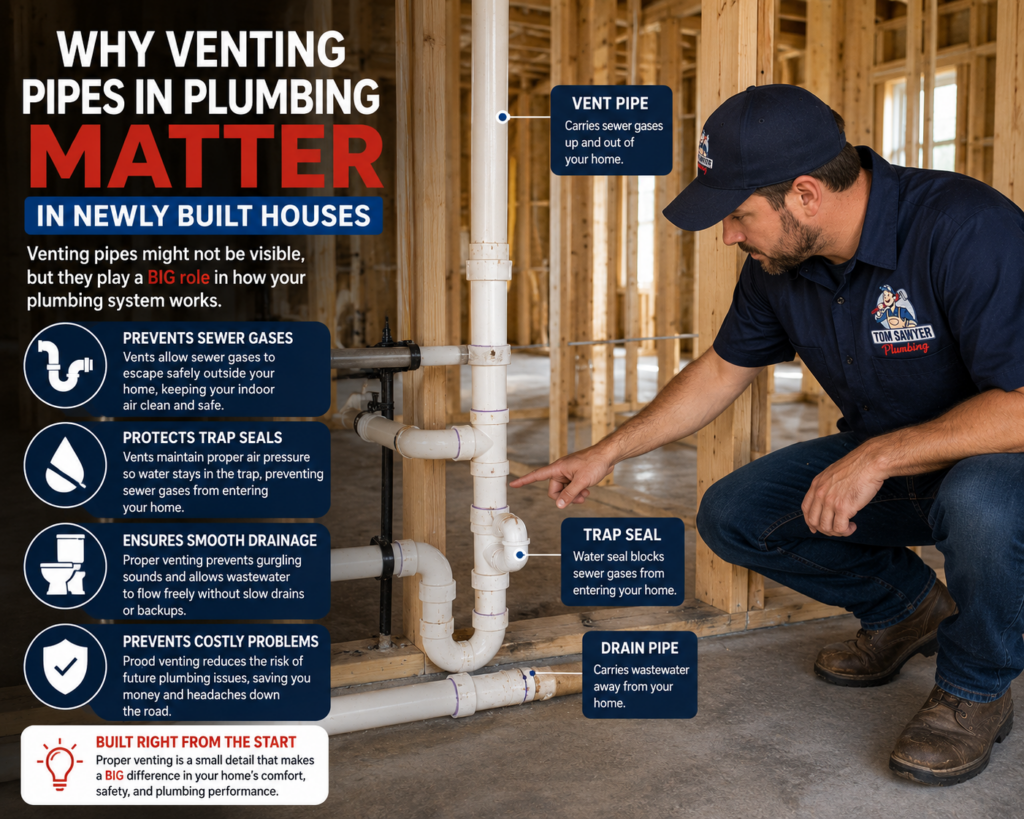
Quick Answer: Venting pipes in plumbing matter because they protect drain flow, balance air pressure, preserve the water seal inside traps, and let sewer gases leave the home safely. In a newly built house, proper venting helps every toilet, sink, bathtub, and shower drain without gurgling drains, slow drainage, or foul odors. It also prevents negative pressure, back-pressure, and the siphon effect that can empty P-traps and cause sewer gas backing up into living spaces. If the vent layout, pipe size, or roof exit is wrong, new homes can develop drainage issues, standing water, and even noise in walls much earlier than expected. A new house may look perfect on the surface, but the plumbing behind the walls has to move both water and air the right way. That is exactly why venting pipes in plumbing deserve more attention during planning, rough-in, inspection, and final walkthrough.
Table of Contents
What a Plumbing Vent Pipe Does in a Newly Built House
A plumbing vent pipe brings fresh air into the drainage system so wastewater can move freely and safely.
Most people notice fixtures, faucets, and finishes. They do not notice the plumbing vent system hidden inside the walls and above the ceiling. But every modern home depends on it. A vent stack or plumbing air vent works with the drain-waste-vent system to support the movement of wastewater through drainpipes without choking the system.
When water drops through a drain, it changes pressure inside the piping. Without a vent, the moving water can create a vacuum or pull hard enough to trigger a siphon effect. That is what makes a home vulnerable to empty traps, sewer smells, bubbling fixtures, and poor drain performance. In simple terms, venting pipes in plumbing keep the drain side stable so every fixture works like it should from day one.
In new builds, this matters even more because early drain complaints often trace back to hidden vent design problems, not the fixture itself. If you already had to get air out of water lines in a new house, you already know how important air movement is inside a plumbing system.
Purpose of Vent Pipe in Plumbing
The purpose of vent pipes in plumbing is to regulate airflow, protect traps, and give sewer gases a safe exit above the roof.
A vent does not carry waste. Its job is pressure control. It creates an air passageway that keeps neutral pressure in the plumbing ventilation system while the drain side carries waste away. That stable pressure protects plumbing fixtures throughout the house and reduces the chance of backups, suction, and odor problems.
The vent system also protects indoor air. When vents are installed correctly, sewer gases leave the house at the roof instead of creeping back through drains. This is why plumbing vents in the house are not optional. They are a core safety and function feature.
A properly vented vent pipe plumbing system also helps different fixtures work independently. One toilet flush should not make a shower gurgle. One sink draining should not make another trap lose water. That separation is one of the big reasons venting pipes in plumbing matter in newly built houses.
Why New Construction Homes Need Proper Vent Layout From Day One
New homes need correct vent design early because small layout mistakes can affect the whole system after the walls close.
A newly built house often has multiple bathrooms, longer pipe runs, kitchen islands, second-floor fixtures, and grouped drains. That means the vent design must be precise. A blocked or undersized vent may not show itself during a quick builder test, but real daily use reveals the weak points fast.
One poor connection can create pressure imbalances across the home. That can lead to toilet bubbling, dry P-traps, and stagnant water in tubs or floor drains.
That is why many homeowners call emergency residential plumbing specialists only after several fixtures start acting up at once. The better move is to understand the warning signs before the home is fully lived in.
How Venting Pipes in Plumbing Actually Work
Venting pipes in plumbing work by adding air where water movement would otherwise create suction or trapped pressure.
As wastewater moves through the drain, it tries to pull air behind it. If there is no path for replacement air, the system creates negative pressure. That pressure can pull water out of traps, slow the drain, or make the fixture talk back with glugs and gulps. A vent prevents that by feeding air into the system and keeping pressure balanced.
Most systems use a main vent stack that rises vertically and exits above the roof. Some layouts also use branch vents, a re-vent, or in allowed cases an air admittance valve (AAV). The goal is always the same: keep the drain-waste-vent system breathing.
What Happens When You Drain a Fixture
- Water enters the drain and starts moving through the drainpipes.
- The moving column of water creates a change in air pressure behind it.
- The vent allows fresh air into the line.
- That keeps neutral pressure inside the system.
- The water seal stays inside the trap.
- Sewer gases continue upward and out of the roof vent.
- The fixture drains without gurgling drains, odor, or backup.
Quick Tip: If a brand-new home has one fixture that drains poorly while others seem fine, do not blame the fixture first. A nearby vent layout issue is often the real cause.
Common Signs a New House Has a Vent Problem
The fastest signs are slow drainage, gurgling drains, odors, and strange fixture reactions when another drain is used.
A vent issue can look like a drain clog at first. But the pattern is different. If one fixture affects another, or if the problem comes with sound and smell, venting needs to be checked.
Warning Signs You Should Not Ignore
- foul odors near a sink, tub, or toilet
- standing water that drains slowly without a visible clog
- toilet bubbling when the shower or sink runs
- noise in walls after flushing or draining
- dry P-traps in a guest bath or basement drain
- repeated drainage issues in several rooms
- signs of blocked vent pipe or a clogged vent stack
- possible sewer gas backing up into bathrooms or kitchens
These are not minor annoyances in a new home. They often point to a vent that is blocked, misrouted, undersized, or not connected the way the plan intended. A good local plumbing company can usually tell the difference between a drain clog and a vent issue by looking at the symptom pattern.
Symptom, Likely Vent Issue, and What It Means
|
Symptom |
Likely Issue |
What it Means |
|
gurgling drains |
restricted vent or bad vent layout |
air is being pulled through the fixture instead of the vent |
|
slow drainage |
poor venting or negative pressure |
water cannot move freely |
|
foul odors |
trap water loss or vent failure |
sewer gases may be entering the home |
|
toilet bubbling |
pressure conflict in branch piping |
air path is wrong |
|
standing water |
poor drain flow with vent imbalance |
wastewater is not clearing correctly |
|
noise in walls |
trapped air, suction, or back-pressure |
the system is not balancing pressure |
|
dry P-traps |
siphoning from bad venting |
the trap lost its water seal |
Types of Plumbing Vents Found in New Homes
New homes may use a mix of standard vertical vents, branch vents, and approved valves depending on layout and code.
Not every vent looks the same in a new build. The design depends on fixture location, wall space, rooflines, and local code.
Common Vent Types You May See
- True vent for a standard vertical vent serving a fixture or branch
- Common vent where two fixtures share the same vent path
- Re-vent pipe / auxiliary vent used to support a fixture farther from the main stack
- air admittance valve (AAV) where code allows a one-way air device instead of a roof vent in some locations
A house can use several of these together. The goal is not to use more vent parts. The goal is to protect flow and trap seals while meeting building codes and code compliance requirements.
If your builder or plumber is planning tight spaces or complex layouts, affordable newly construction plumbing technicians should confirm the vent approach before drywall hides the system.
Vent Pipes for Toilets and Bathroom Groups
Vent pipes for toilets are critical because toilets move large volumes of water quickly and can disrupt nearby fixtures if venting is weak.
The bathroom is where many vent problems first show up. A flush sends a large rush of water into the drain line. If the vent is missing, restricted, or too far away, the force can pull air through a tub, sink, or shower trap. That is when you get bubbling, odors, or a glugging sound.
This is also where fixture grouping matters. A toilet, vanity, and shower often share part of the drain layout. When one vent is poorly placed, several fixtures can suffer. Proper venting pipes in plumbing help each bathroom fixture drain on its own without interfering with the others.
Size of Vent Pipe for Toilet
The size of vent pipe for toilet depends on local code, fixture load, and the total vented layout, but correct sizing is essential for stable pressure.
Pipe size affects how much air the system can move. Too small, and the line may not keep up with drain demand. Too large is not usually the practical issue in homes, but wrong sizing, wrong slope, and poor branch layout can all create performance problems.
In most cases, toilet vent sizing is tied to fixture units and the local plumbing code. That is why toilet venting should never be guessed. The vent must match the whole bathroom group, not just the toilet alone.
Quick Fix Tip: If a new toilet flushes fine but causes nearby gurgling, do not rush to replace the toilet. The vent path, not the fixture, is often the real issue.
Local Vent Pipe in Plumbing
A local vent pipe in plumbing helps a specific fixture or nearby group maintain proper pressure where the main stack alone is not enough.
Large or multi-story homes often need local support in the vent layout. This is common in additions, long bathroom runs, island sinks, and second-floor groups. A local vent can reduce pressure swings and protect nearby traps from siphoning.
This matters in newer homes with open floor plans and larger footprints. The farther a fixture sits from the main stack, the more important correct local vent support becomes.
Roof Exit, Freezing Risk, and Exterior Exposure
A roof vent has to stay open because the whole plumbing system depends on it as a final pressure and gas release point.
The vent usually exits through the roofline. That rooftop opening must remain clear. Leaves, nests, snow, and ice can restrict airflow and create symptoms inside the home. In Illinois winters, frost can become a real problem on exposed vent openings.
Roof Vent Checks That Matter
- look for obvious blockage near the roof vent opening
- note any sewer smell near the roofline
- pay attention to winter freeze conditions
- watch for recurring bathroom gurgles after storms
- inspect after major roofing work or vent flashing repair
- do not assume a new house means a perfect roof penetration
A roof vent issue is often invisible from inside, but the symptoms show up indoors fast. This is one more reason venting pipes in plumbing should be part of routine post-build inspection.
What Happens When Venting Is Wrong in a Newly Built House
Bad venting causes pressure imbalance, trap failure, odor, poor drainage, and long-term wear on the plumbing system.
When vents are installed wrong, several things can happen at once. Wastewater may slow down. Traps may lose water. Odor may enter the home. Moisture and hidden drain stress can build over time. A new house can go from “small annoyance” to repeated service calls very quickly.
A misdesigned or obstructed plumbing vent system can also raise concern during resale, renovation, or inspection because venting is a code-driven system. Homes that fail vent requirements may need correction work behind finished walls or above ceilings.
Why Proper Venting Matters for Performance and Safety
|
What Proper Venting Does |
Why It Matters in a New House |
|
maintains airflow |
keeps drains working from first occupancy |
|
prevents negative pressure |
stops suction-related trap loss |
|
limits back-pressure |
reduces bubbling and fixture interference |
|
preserves the water seal |
blocks sewer gas entry |
|
sends sewer gases outside |
protects indoor air quality |
|
supports independent fixture use |
one drain does not disturb another |
|
helps meet building codes |
avoids inspection and remodel issues |
|
protects the drainage system |
improves long-term reliability |
New Construction Venting Mistakes That Cause Early Problems
The most common mistakes are bad placement, poor sizing, hidden blockage, and improper tie-ins.
Some vent issues are design mistakes. Others happen during installation. A vent line may be routed wrong, tied in too low, or not supported properly. A roof exit may be blocked during construction debris cleanup. A fixture may be too far from the vent. A branch may depend on an air admittance valve (AAV) where a full vent would perform better.
These are the kinds of issues that do not always show up in a quick test. But daily use exposes them. That is why venting pipes in plumbing deserve a real check before the home is considered “done.”
Quick Inspection Tips for Homeowners
Homeowners can spot symptoms early, but diagnosis should focus on patterns, not guesses.
Here are practical ways to notice a vent problem early in a new home:
Run water in one bathroom and listen in another. Flush a toilet and watch the shower drain. Smell around sinks that are not used often. Check whether problems happen in one zone or across the whole house. If multiple fixtures react to one drain event, venting should move higher on the suspect list.
Pay close attention after heavy rain, snow, roofing work, or long periods of vacancy. These are the times when vent symptoms often become obvious.
When to Call a Professional for Venting Problems
Call a plumber when symptoms affect more than one fixture, odors appear, or vent problems keep returning.
New house plumbing should not smell like sewer gas. It should not glug loudly. It should not leave stagnant water in tubs or pull water out of traps. If any of that is happening, the issue needs to be checked before it turns into damage, mold risk, or repeated drain calls.
A licensed plumber can inspect vent routing, confirm fixture vent distance, test for obstruction, and verify code compliance. That is especially important before remodel work, bathroom additions, or warranty deadlines expire.
Protect Your New Home With a Proper Venting Inspection
A new house should drain cleanly, stay odor-free, and protect every trap and fixture from pressure problems. If you are noticing gurgling, bubbling, odors, or repeated slow drains, the issue may be deeper than a simple clog. Tom Sawyer Plumbing, LLC can inspect venting, drainage behavior, and fixture performance to help protect your new home from bigger plumbing problems.
Call Tom Sawyer Plumbing, LLC at 6308499265 to schedule a plumbing inspection and get answers before small venting issues turn into costly repairs.
FAQs About Venting Pipes in Plumbing
What do venting pipes in plumbing actually do?
They let air enter the drainage system, protect trap seals, balance pressure, and send sewer gases safely above the roof.
Why do plumbing vents matter more in newly built houses?
New homes can hide layout, sizing, or installation mistakes behind finished walls. Proper venting prevents early drainage and odor problems.
Can a blocked vent pipe cause slow drainage?
Yes. A blocked vent pipe can create pressure problems that slow wastewater flow and affect multiple fixtures.
What is the difference between a vent stack and an air admittance valve?
A vent stack vents through the roof, while an air admittance valve (AAV) is a mechanical one-way air device used in some approved situations.
Do all plumbing fixtures need venting?
Yes. Fixtures need vent protection so traps keep their water seal and the system drains correctly without siphoning.
What are signs of sewer gas backing up into the house?
Common signs include foul odors, dry traps, gurgling drains, bubbling toilets, and recurring bathroom smells.
Yes. A blocked vent pipe can create pressure problems that slow wastewater flow and affect multiple fixtures.
Yes. Fixtures need vent protection so traps keep their water seal and the system drains correctly without siphoning.
Common signs include foul odors, dry traps, gurgling drains, bubbling toilets, and recurring bathroom smells.
Tom Sawyer Plumbing LLC inspects and repairs plumbing vent systems for homeowners in Carol Stream, Wheaton, and all surrounding DuPage County communities.