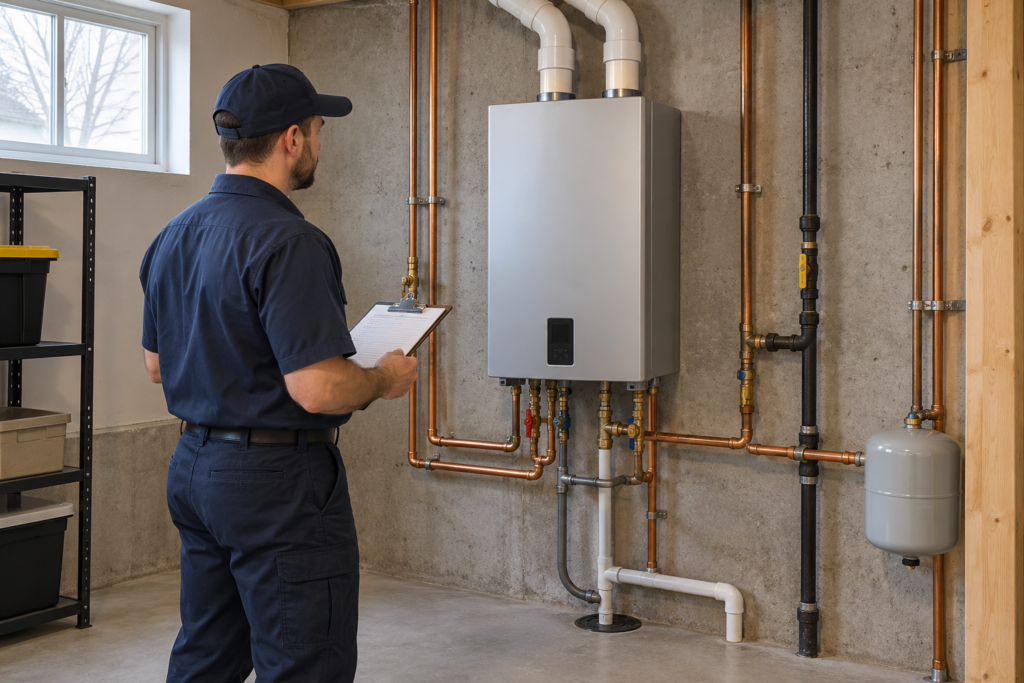
A tank-to-tankless water heater conversion quote should cover the installation that the home needs, not just the new heater. Ask the contractor to identify the model, supporting gas or electrical work, venting where applicable, water connections, any condensate handling, removal of the old unit, commissioning, and exclusions before you approve the project.
A tankless model can fit a home’s hot-water demand and still require supporting work that changes the installation scope. Tom Sawyer Plumbing provides tank and tankless water heater installation in West Chicago. Ask for an evaluation of the existing setup alongside the equipment recommendation.
Confirm the Proposed Equipment Before Comparing Quotes
The written quote should name the manufacturer and model being proposed. Different models can have different installation requirements and performance, even when both are described as tankless. The recommendation should match the household’s likely overlapping hot-water use.
Keep the capacity question separate from the installation-price comparison. A quote for a different model or a different fuel type may describe a different project. Ask why the model fits the home and whether the same assumptions were used in each proposal.
For the demand calculation, compare fixtures used together and the required temperature rise. Tom Sawyer’s explanation of tankless water heater sizing covers those factors. The installation quote should then explain how the selected unit will be supported.
Identify the Gas or Electrical Work Included
For a gas-fired conversion, ask whether the existing supply can meet the selected appliance’s requirements while other gas appliances are operating. A pipe that served the old tank is not automatically a verified supply for every tankless model.
The proposal should describe any gas piping, connections, or related coordination included in the work. Ask how adequacy will be checked and who handles any separate work or approvals. Do not adjust the gas system yourself to test the recommendation.
For an electric model, ask who evaluates service and circuit capacity and who completes electrical work if it is needed. A nearby receptacle or available wall space does not establish that the selected unit can be connected there.
If another trade or utility must participate, request a clear responsibility split. Understand whether its work is included in the plumbing quote, separately quoted, or still awaiting evaluation before deciding that the proposal is complete.
Compare written inclusions rather than assuming that the phrase complete installation covers every supporting system. A contractor should be able to explain what existing components will remain and what must change for the selected equipment.
Clarify Venting and the Installation Location
For a model that requires venting, ask which vent route and materials are proposed and how the termination will meet that appliance’s installation requirements. The old tank’s vent arrangement may not suit the replacement model.
The location should be evaluated with the proposed routing and required access in mind. A convenient mounting spot can create a more difficult vent, plumbing, or service-access plan. Ask why the chosen position is practical for the actual home.
If openings through a wall or other surfaces are needed, identify them in the quote. Clarify who finishes those openings and whether any patching or painting remains separate. Do not assume a small wall-mounted unit means no building work.
Ask About Condensate Handling Where Applicable
Some equipment creates condensate that needs an appropriate disposal arrangement. Ask whether the selected model requires it and what piping or other components are included. The answer should follow the model and the installation conditions.
The quote should explain the intended route and whether additional equipment or coordination is needed. If that part of the plan is unresolved, ask how it could affect the work before authorizing a final scope.
A model that does not require the same condensate arrangement is not necessarily equivalent in every other respect. Compare the full equipment recommendation and installation conditions rather than treating one omitted line item as a better deal.
Include Water Connections and Service Access
Ask which water lines, shutoffs, and connections will be replaced, adapted, or retained. The proposal should show how the equipment connects to the existing plumbing and whether access for future servicing has been considered.
Water quality and maintenance requirements should also be discussed for the selected unit. Ask what the manufacturer recommends and whether any proposed treatment equipment is part of the quote or a separate option.
Clarify the purpose of every optional item. A suggested accessory may improve a particular setup, but it should have a stated reason. It should not appear as a mandatory upgrade without an explanation tied to the home or the appliance requirements.
If a recirculation arrangement is being proposed, ask what it will do, what connections it requires, and whether the quote includes its controls and supporting work. Tankless heating and shorter waits at distant fixtures are different planning questions.
State Removal, Disposal, and Household Downtime
The quote should explain what happens to the old tank and its unused connections. Ask who drains, disconnects, removes, and disposes of it and how retained systems will be left after the change.
Discuss when hot water will be unavailable and whether other water use is affected. An estimated sequence helps the household prepare, but ask how the contractor will communicate any change discovered during installation.
Keep the route to the equipment accessible as agreed with the crew. Ask whether stored belongings need to be moved and who protects affected surfaces. Avoid dismantling old connections or moving an appliance to make room yourself.
If the current heater is actively leaking, tell the contractor before scheduling the conversion. A planned upgrade and an urgent leak response can need different first steps. Keep clear of water near electrical equipment and request prompt help.
Ask what event restores normal hot-water use and who will communicate it. A finished-looking appliance should not be treated as ready before the installer completes the required checks.
Know Who Handles Approvals and Final Checks
Ask what approvals or inspections apply to the address and the proposed equipment, and who is responsible for arranging them. Requirements should be confirmed for the actual work rather than assumed from another project.
The quote should state how the installation will be commissioned and checked. Ask what operation, connection, safety, and performance checks are included for the selected model and what record or walkthrough you will receive.
The installer should explain the normal controls, maintenance access, and when to request service. Ask for the appliance documents and the terms of any actual warranty being offered, without assuming a warranty duration from an advertisement for another unit.
If a final item is excluded or handled later, ask how that affects completion and normal use. A clear closeout plan prevents uncertainty over whether the quoted job ends at mounting the heater or includes bringing the installation into operation.
Keep the final equipment documents and installation record together. They can help a future service technician identify the model, supporting work, and any maintenance directions specific to the completed setup.
Resolve Unknowns Before Choosing a Quote
Ask whether any part of the supporting-system evaluation remains incomplete. A proposal can identify an allowance or unresolved condition without presenting it as a confirmed requirement. The important point is understanding what is known before authorizing work.
If two recommendations differ, have each contractor explain the difference against the same home conditions. Different assumptions about utility work, finish restoration, or included commissioning can explain a difference in the quoted scope.
Request a clear process for changes discovered during installation. Ask how findings will be documented and how additional work would be approved before it is performed.
Questions About Tank-to-Tankless Conversion Quotes
Is a tankless conversion the same as replacing an old tank?
No. Changing equipment type can change supporting utility, routing, and installation requirements. Ask for those differences to be evaluated before comparing the conversion with another storage-tank replacement.
Does tankless eliminate the wait for hot water at a distant tap?
It does not automatically shorten the distance between the heater and the fixture. Ask how the plumbing layout affects the wait and whether a separately designed recirculation arrangement is proposed. Its scope and controls should be explained.
Can I compare quotes using only the heater model?
The same model makes comparison easier, but supporting work can still differ. Compare the utility work, venting where applicable, water connections, removal, finishes, commissioning, and exclusions as well.
Should every optional accessory be included?
Ask why each item is recommended and whether it is required by the selected equipment or addresses a particular household need. A quote should distinguish required installation work from an optional improvement.
What if the contractor cannot confirm utility capacity yet?
Ask what evaluation remains, who performs it, and how the result could change the recommendation or cost. An unresolved supporting-system question should be identified before you commit to a final installation scope.
Get a Complete Conversion Plan in West Chicago
The strongest quote connects the chosen model to the home, defines supporting work, assigns responsibilities, and explains what the completed installation includes. When proposals differ, ask the contractors to compare those details against the same existing setup.
For a tank-to-tankless evaluation in West Chicago, call Tom Sawyer Plumbing at (630) 849-9265. Describe your busiest hot-water routine, the current heater location, and any known gas, electrical, or plumbing concerns. Ask for the equipment recommendation and installation scope to be explained together.