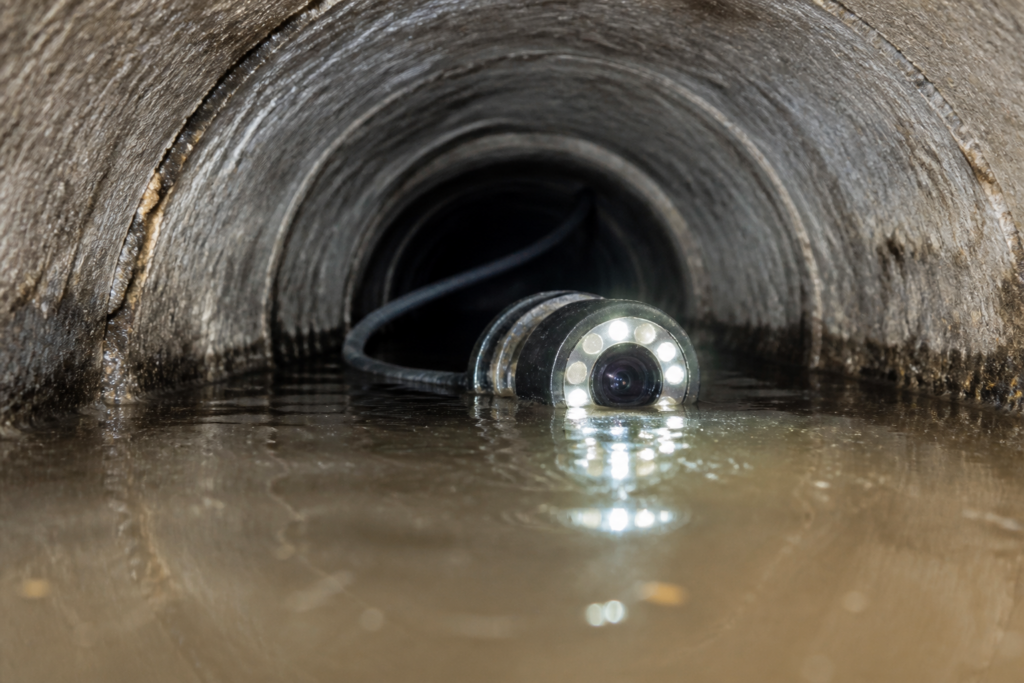
Standing water can obscure or limit a sewer camera’s view because the inspection depends on light and a clear optical path. A waterproof camera may continue operating in water, but murky wastewater, suspended debris, grease, sediment, and the position of the lens can hide part of the pipe wall. The camera may still provide useful information before or near the waterline, but an unclear submerged section should not be treated as a complete diagnosis.
Standing water alone does not prove that a sewer line is broken, collapsed, or improperly sloped. It shows that water was present and that visibility was limited at that location and time. A plumber may need to let the flow settle, approach from another existing access point, clear a confirmed restriction, or inspect the line again before deciding what the hidden section means.
Waterproof Does Not Mean a Clear View Through Wastewater
Sewer cameras are built to work in wet drainage systems. Their lenses and lights can travel through damp pipes, active flow, and shallow water. That durability protects the equipment; it does not make murky water transparent.
The image can become difficult to interpret when the lens is below the waterline or when particles reflect the camera’s lights. Grease, paper, sediment, or disturbed buildup may cloud the water. If the camera head is pressed against debris or sits at the bottom of a pooled section, the lens may show only a close, distorted surface instead of the full pipe circumference.
Clear, shallow water may allow a partial view. Dark or moving wastewater may block much more of it. This is why an experienced technician describes the quality and limits of the image instead of saying that every submerged section is invisible or that every unclear image represents pipe damage.
Why Water May Be Standing in the Line
Several conditions can leave water in front of a sewer camera. The video must be considered with drainage symptoms, access location, cable distance, flow behavior, and any view obtained before the lens reached the water.
Recent fixture use can send water through the line during an inspection. A washing machine discharge, shower, toilet flush, or other indoor use may create temporary flow. If the water passes and the line drains, the technician may be able to continue after the activity stops.
A downstream restriction can also hold water upstream. Grease, waste, roots, scale, or another obstruction may narrow the available path and slow drainage. The camera may reveal debris before the image becomes obscured, but the hidden portion cannot be evaluated confidently until conditions improve.
Water may collect in a low section of pipe. A change in grade, settlement, or another alignment condition is one possibility, but one pool on camera does not identify the cause or measure its extent. The apparent waterline can also be affected by the camera’s angle and position inside the pipe.
An access point can influence what the camera encounters first. Water near one cleanout or drain may not describe the entire sewer lateral. When another approved access point exists and can be used safely, a view from the opposite direction may help separate a local access condition from a broader drainage problem.
What an Obscured Camera View Does Prove
An unclear image establishes a limited set of facts: the camera reached a location where water, debris, or another condition reduced visibility, and the technician could not see every surface needed for a complete evaluation.
The view before the obstruction may still be valuable. It can show the general path, visible buildup, roots, an offset, a change in pipe material, or active flow. The technician can record where the image quality changed and compare that point with accessible plumbing features. Those observations can guide the next diagnostic step.
The limitation itself should be documented. A homeowner should know which section was visible, which section was not, and whether the recommendation is based on a confirmed defect or on the need for a clearer second look.
What Standing Water Does Not Prove by Itself
Standing water does not automatically prove a sewer belly, collapse, break, root intrusion, or failed joint. It also does not establish that the entire line is blocked or that replacement is required.
Those conclusions need corroborating evidence. A clearer repeat inspection may reveal a structural defect, or it may show an intact pipe after a restriction is removed. Drainage behavior, repeated backup symptoms, the location of the water, and what the camera sees from another direction can all affect the final assessment.
Avoid a repair decision based only on a dark or submerged image. If the pipe surface that would support the diagnosis is hidden, the responsible next step is to improve the view or explain why another method is needed—not to guess at the condition behind the water.
Safe Steps for a Homeowner During an Unclear Inspection
If the technician asks for indoor water use to pause, avoid flushing toilets, running sinks, starting laundry, or using other connected fixtures until the inspection step is complete. This can reduce active flow and help show whether the pooled water drains on its own. Follow the technician’s direction because homes can have different drainage layouts.
Share what happened before the inspection. Mention which fixtures were used, whether more than one drain is slow, whether toilets gurgle, and whether water has backed up into a tub, shower, floor drain, or cleanout area. Timing can help distinguish temporary flow from a persistent restriction.
Do not open, loosen, or remove a sewer cleanout cap yourself. A line under pressure can release sewage unexpectedly. Do not insert a rod, rental cable, camera, hose, or other object, and do not pour chemical drain cleaner into the system. Chemicals may not reach the cause and can expose anyone who later opens or services the line.
If sewage is surfacing, keep children and pets away, avoid contact, and reduce or stop water use when it is safe to do so. A sewage backup or overflowing cleanout needs prompt professional attention rather than further testing by the homeowner.
How a Plumber Decides Whether to Clear, Change Access, or Rescope
The next step should match the evidence already visible. A professional sewer camera inspection in West Chicago can begin by confirming whether the water is moving, rising, falling, or remaining at the same level. The technician can also check whether recent fixture use is contributing to the flow.
If the line settles after water use stops, the camera may be advanced again without additional work. A second pass can show whether the first image was temporarily obscured or whether water remains in the same section.
When an existing cleanout or other approved access point provides a safer angle, the technician may inspect from that direction. Alternate access is not always available, and it should not be created or forced simply to obtain a different view.
If visible evidence supports a restriction, appropriate professional drain cleaning may be needed before the hidden pipe wall can be evaluated. The clearing method depends on the pipe, access, and likely material in the line. Cleaning is not a promise that every section will become visible, but it can remove the condition preventing a useful inspection.
After conditions improve, the line should be rescoped. The repeat view is what helps distinguish removable buildup from a pipe defect, recurring low section, or other condition that needs further evaluation.
What a Repeat Inspection May Reveal
A clearer second inspection can lead to different outcomes.
If the water drains and the pipe surface is intact, the immediate issue may have been active flow or removable material. The plumber can explain whether monitoring or maintenance is appropriate based on the visible result and the home’s symptoms.
If roots, grease, scale, or compacted debris are visible, the plumber can relate that finding to the cleaning performed and determine whether more work is needed. The video should show the condition rather than rely only on the earlier obscured view.
If the repeat inspection shows an offset joint, cracked section, deformation, loss of grade, or another structural concern, sewer line repair and replacement can be evaluated for that confirmed location. The scope of repair should follow the visible defect and supporting evidence, not the mere presence of water.
If visibility remains limited after reasonable clearing or alternate access, the technician should explain the remaining uncertainty. Another diagnostic method or a more limited recommendation may be more responsible than claiming to know what cannot be seen.
Signs the Water May Be Part of a Larger Drainage Problem
An obscured camera image matters more when it appears with other sewer symptoms. Prompt attention is appropriate when several fixtures drain slowly at the same time, a toilet gurgles when another fixture runs, sewage backs up into a tub or floor drain, wastewater surfaces outdoors, or an affected cleanout area overflows.
Stop using connected water fixtures if continued use causes the backup to rise. Keep clear of contaminated water and avoid touching a cleanout cap or drain opening. These conditions can indicate a downstream restriction, but the cause still needs to be identified safely.
A single slow sink is often different from a whole-house drainage pattern. Tell the plumber exactly which fixtures are affected and when the symptoms occur so the camera findings can be interpreted in the right context.
Frequently Asked Questions
Can a sewer camera see underwater?
It may provide a partial image in clear, shallow water, and the equipment is designed for wet conditions. Murky wastewater, suspended particles, depth, flow, and lens position can reduce or eliminate the useful view of the submerged pipe surface.
Does standing water always mean there is a belly in the sewer line?
No. A low section is one possible cause, but recent water use, a downstream restriction, debris, access position, and other conditions can also affect what appears on camera. A belly or grade problem needs clearer and corroborating evidence.
Should the camera inspection continue if the view is obscured?
The technician should avoid forcing the camera or guessing about hidden pipe. Depending on the conditions, it may be appropriate to let flow settle, use another existing access point, clear a verified restriction, or stop and plan a repeat inspection.
Can drain cleaning make the camera view clearer?
It can when buildup or a blockage is holding water or covering the pipe surface. The correct cleaning method depends on the pipe and obstruction, and the line should be inspected again afterward to confirm what is actually visible.
Does an unclear camera image mean the sewer line must be replaced?
No. Replacement should be based on a confirmed structural condition and its location and extent. An obscured image means more information is needed before making that decision.
Get a Clearer Sewer-Line Assessment in West Chicago
Standing water can be an important finding, but it is not a diagnosis by itself. The most useful inspection separates what the camera clearly showed from what remained hidden, then uses safe clearing, another available access point, or a repeat view to reduce the uncertainty.
To have an unclear sewer-camera result reviewed and the next diagnostic step explained, contact Tom Sawyer Plumbing. Share which fixtures are affected, whether a backup is active, and what portion of the line could not be seen.