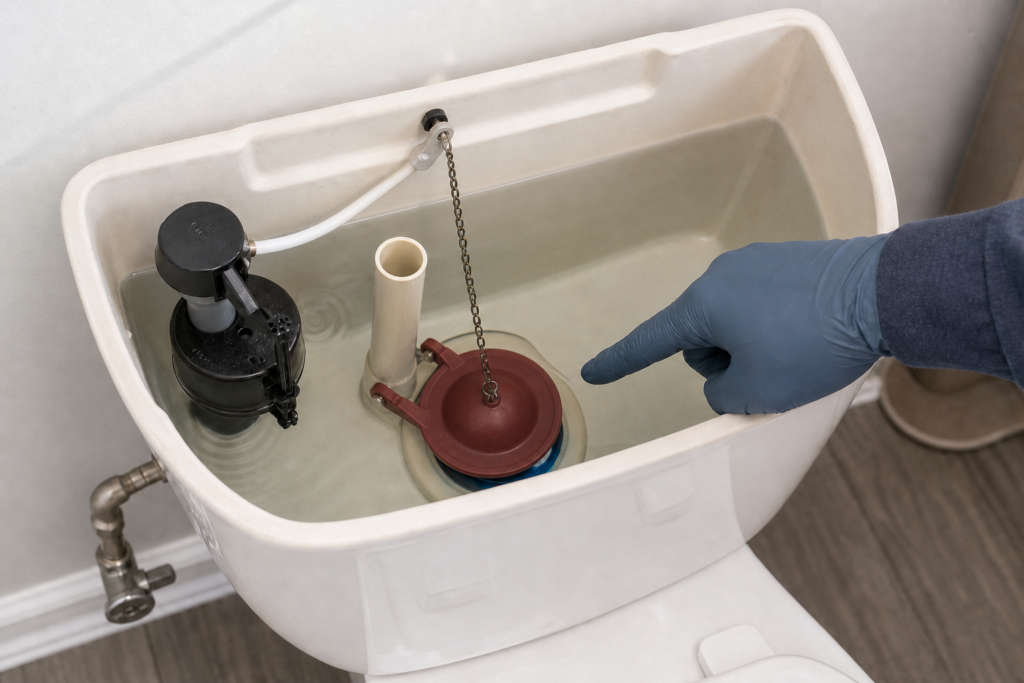
An unused toilet that suddenly refills for a few seconds is usually responding to a change inside the tank. Water may be slipping from the tank into the bowl through a flapper or canister seal, or the fill valve may be allowing the water level to change around the overflow tube. Once the level drops far enough, the float tells the fill valve to open and replace the missing water.
The sound is sometimes called a phantom flush, but the toilet is not completing a normal flush. The short refill is evidence that water moved or the fill control reopened. The cause should be confirmed before replacing a part because several tank conditions can create a similar sound.
A Normal Refill Happens Right After a Flush
After a normal flush, the tank empties into the bowl and the fill valve opens. Water refills the tank until the float reaches its shutoff level. That process is expected.
The condition worth investigating begins after the toilet has been quiet and unused. You may hear water run for a few seconds, stop, and repeat later. The interval might be regular or unpredictable. A longer interval can mean the tank is losing water slowly. Rapid or nearly continuous cycling can point to a larger leak path or a fill control that is not closing reliably.
Listen for where the sound comes from. Water spraying or hissing near the fill valve is different from water quietly moving through the center flush-valve opening. Sound alone cannot identify the failed component, but the timing helps separate a normal post-flush refill from an idle-tank problem.
How the Toilet Tank Holds and Replaces Water
Most toilet tanks use a few connected parts to manage each flush:
- The flush handle and chain lift a flapper or canister seal.
- The flush-valve opening releases tank water into the bowl.
- The flapper or canister seal closes that opening after the flush.
- The fill valve admits replacement water.
- The float tells the fill valve when to stop.
- The overflow tube provides an internal path if the tank water rises too high.
Some toilets use different shapes or dual-flush mechanisms, but the same basic decision applies: the tank must hold water below the overflow level, and the fill valve must close when the correct level is reached.
If the tank cannot hold that level, the float eventually drops and starts another refill. If the fill valve or float does not control the level correctly, water may continue into the overflow tube or the valve may reopen when it should remain closed.
A Flapper or Canister Seal May Be Letting Water Pass
A worn, hardened, distorted, or poorly seated tank seal is a common path for water to leave the tank. The leak can be quiet because the water moves directly through the flush valve into the bowl. The bowl may not visibly swirl, and the floor can remain completely dry.
As the tank level falls, the float falls with it. The fill valve opens briefly, restores the level, and closes. That is the short refill you hear.
The seal itself is not the only possible issue around the opening. Mineral residue, debris, a damaged sealing surface, or a canister that does not settle evenly can prevent a complete seal. Different toilet models use different parts, so a replacement chosen only by appearance may not fit or operate correctly.
A plumber can verify whether the tank is losing water through the flush-valve opening and whether the seal, seat, canister, or another part of the assembly is responsible.
The Chain Can Keep the Seal From Closing Fully
The handle chain needs enough slack for the flapper or canister to close, but it should not be so loose that it becomes trapped beneath the seal.
A chain that is pulled tight can hold the seal slightly open. A long chain can fall into the opening or catch on another part. A bent handle arm or a mechanism that does not return freely can create a similar condition.
Look for obvious interference only. Do not force the handle, bend the arm, or pull on a chain while the mechanism is under tension. Tank parts can be brittle, and changing one position may create a second problem or make the original symptom harder to reproduce.
If the chain is clear and the seal appears closed but the tank level still drops, the leak path may be too small to see directly or may involve a different component.
Water May Be Entering the Overflow Tube
The overflow tube is an open vertical tube inside the tank. The normal waterline should remain below its top. If the float is set too high, the fill valve does not close, or the valve closes inconsistently, water can spill into the tube and travel to the bowl.
This internal overflow may not place water on the bathroom floor. You might see a small stream entering the top of the tube, hear a persistent hiss, or notice the fill valve start and stop.
Do not bend a float arm, turn an unfamiliar adjustment, shorten the overflow tube, or block its opening. Toilet designs differ, and the overflow tube is a safety path. A plumber can compare the actual waterline with the toilet’s fill-level requirements and test whether the float and valve shut off consistently.
The Fill Valve Can Reopen or Fail to Close Cleanly
A fill valve controls incoming water under supply pressure. Wear, internal debris, a sticking float, or an incompatible adjustment can affect how it opens and closes. The valve may hiss, chatter, refill slowly, or briefly reopen even when the tank seal appears to hold.
Supply pressure and the condition of the fixture shutoff can also matter during diagnosis, but those conditions should be measured rather than guessed. A short sound near the valve does not prove that the valve alone is defective. If tank water is leaking into the bowl, a correctly operating fill valve will still reopen because the float has dropped.
That is why replacing the fill valve without checking whether the tank holds water can leave the refill cycle unchanged. The leak path and the fill response need to be considered together.
Safe Observations Before Scheduling Repair
You can collect useful clues without removing parts or forcing the mechanism.
First, confirm that no one has recently flushed the toilet. Note how long the fixture stays quiet before it refills and how long the refill lasts. If practical, compare the timing more than once.
Lift the tank lid carefully with both hands and place it on a padded, stable surface. Porcelain lids are heavy and can chip. Keep cleaners, tools, and loose objects out of the tank.
With the toilet idle, look for:
- Water moving into the overflow tube
- A tank waterline that slowly falls
- A chain caught beneath or pulling on the seal
- Ripples near the flapper, canister, or fill valve
- A float rubbing another tank component
- Corrosion, cracking, or a loose-looking connection
A few drops of food coloring placed in the tank can provide a non-destructive clue. Do not flush or use the toilet during the observation. If colored water appears in the bowl, water is moving from the tank to the bowl. The result does not identify which seal or surface has failed, and no color does not rule out an intermittent problem.
Record a short video or note the waterline and timing if the symptom stops before a plumber arrives. Avoid reaching into moving parts or operating the mechanism with the lid removed unless a professional directs you.
Know When to Close the Toilet Shutoff
A brief refill with all water contained inside the toilet usually allows time to arrange an inspection, but some conditions need prompt attention.
Close the fixture shutoff if water is rising toward an overflow condition, running continuously, leaking from the supply connection, reaching the floor, or repeatedly cycling at short intervals. Turn the valve gently clockwise only if it moves normally and you can do so without force. Do not use a tool on a stuck or corroded valve.
If the shutoff will not move, does not stop the flow, or begins leaking when touched, stop and contact a plumber. Protect the floor from any active leak without dismantling the supply connection.
A tank that cracks, a bowl that threatens to overflow, or water that cannot be isolated is different from a quiet internal leak. Stop using the fixture until the immediate water condition is controlled.
Why a Guessed Replacement Part May Not Fix It
Flappers, canister seals, fill valves, floats, chains, and flush-valve assemblies are not universal. The correct repair depends on the toilet model, the condition of the sealing surface, the actual water path, and whether more than one part is worn.
A new flapper will not solve water entering the overflow tube. A new fill valve will not stop a damaged tank seal from leaking into the bowl. Changing an adjustment may temporarily alter the sound without correcting the underlying condition.
Professional toilet and fixture repair can identify the exact leak path, confirm compatible components, check the waterline and valve shutoff, and verify the repair through repeated flush and idle tests.
What a Plumber Checks During an Intermittent-Refill Visit
A plumber can reproduce the symptom and inspect the tank in a logical order. The visit may include checking whether the tank level falls while the fixture is idle, whether water enters the overflow tube, and whether the fill valve closes at a consistent level.
The plumber can also inspect the flapper or canister seal, flush-valve seat, chain travel, handle return, float clearance, refill-tube placement, supply connection, and fixture shutoff. If the toilet uses a model-specific tower or dual-flush assembly, identifying that design helps prevent an incompatible repair.
After the repair, the tank should refill to the intended level, the valve should stop cleanly, the seal should hold during an idle observation, and the toilet should complete normal flushes without leaking at the tank, supply, base, or floor.
For a broader fixture or piping concern, residential plumbing service in West Chicago can help separate an isolated toilet problem from a supply-pressure or multi-fixture condition.
Frequently Asked Questions
Is a toilet refilling by itself the same as a phantom flush?
People often use “phantom flush” for a toilet that refills after sitting unused. The toilet usually is not completing a full flush. Tank water has dropped or the fill control has reopened, so the valve replaces water for a short time.
Can a toilet leak internally without water on the floor?
Yes. Water can move from the tank through the flush valve or overflow tube into the bowl. The exterior can remain dry even though the fill valve cycles repeatedly.
Does colored water in the bowl prove the flapper is bad?
It proves that water moved from the tank to the bowl during the observation. A flapper or canister seal is one possible path, but the test does not identify the exact part or condition by itself.
Why does the toilet still refill after a new flapper?
The replacement may not match the toilet, the sealing surface may be damaged or dirty, the chain may interfere, water may be entering the overflow tube, or the fill valve may have a separate problem. The actual path needs to be confirmed.
Should I turn off the water between uses?
If the toilet runs continuously, cycles rapidly, leaks outside the tank, or creates an overflow risk, isolate it with the fixture shutoff only if the valve moves normally and remains dry. A stuck, corroded, ineffective, or leaking shutoff needs professional attention.
Stop the Unused Refill Cycle at Its Source
A toilet that briefly refills while no one is using it is giving you a useful clue: the tank water level changed or the fill mechanism reopened. Checking the timing, waterline, overflow tube, seal area, and chain can help describe the symptom without turning observation into a repair guess.
To have the tank leak path, fill valve, shutoff, and compatible parts checked in West Chicago, contact Tom Sawyer Plumbing and mention how often the toilet refills and whether any water appears outside the fixture.